We are pleased to announce the winners of the Society for the Anthropology of Europe (SAE)-CES Pre-Dissertation Fellowship
2026 Winner: Ava Rawson

Ava Rawson, Oxford University, “The Post-Life of Oil: Decommissioning and the Energy Transition in the North Sea Oil and Gas Industry”
Project Abstract:
With the offshore oil and gas industry of the North Sea in steady decline, this project explores how post-oil
futures are being assembled through decommissioning activity. Understood through the lens of liability, an ethnographic study of the labour necessary to decommission offshore hydrocarbon infrastructure reveals the understudied yet deeply entangled nature of the afterlives of extractive sites and ideals of a just energy transition. Drawing on economic and legal anthropology, this research treats liability not as a regulatory framework or technical constraint, but as a generative social form that is used, negotiated, and evacuated by industry stakeholders. Decommissioning challenges the binaries of waste and assets, care and abandonment, and the dueling imaginaries of alarmist and utopian energy futures. This research ultimately advances collective efforts to ensure the efficacy of the energy transition through a study of the potentiality of post-oil futures, alongside a primacy to the infrastructural legacies which will endure within our decarbonized world.
2026 Runner Up: Hatim Rachdi
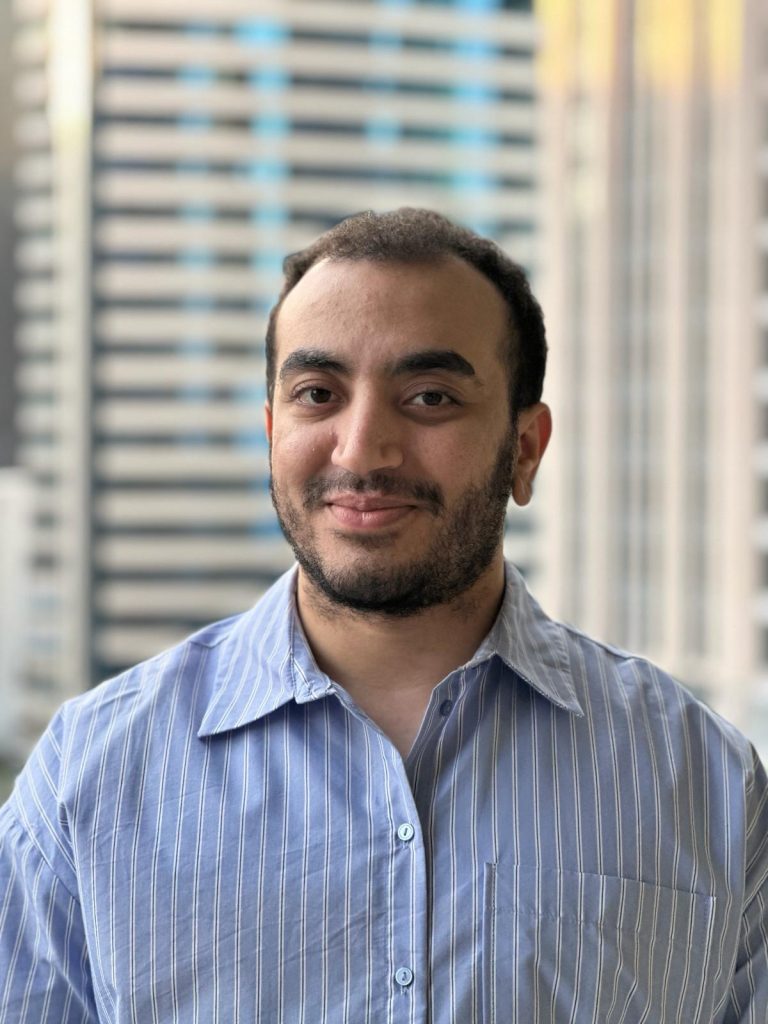
Hatim Rachdi, Yale University, “Intimate Sovereignties: Kinship, Language, and Family Life in the Spanish-Moroccan Borderlands”
Project Abstract:
This project examines how families living across the Spanish-Moroccan borderlands organize everyday life within overlapping regimes of sovereignty linking Spain, Morocco, and the European Union. My dissertation research focuses on the North African Spanish enclaves of Ceuta and Melilla and their neighboring Moroccan cities of Fnideq and Nador, a regional border system where European, Spanish, and Moroccan authorities intersect. While this frontier is often studied as a site of migration control and geopolitical tension, it is also a densely interconnected social world where families organize work, caregiving, and social reproduction across a militarized yet porous border. Drawing on political anthropology, feminist anthropology of kinship, and linguistic anthropology, the project investigates how sovereignty is experienced through everyday domestic life and institutional encounters. It asks how households navigate bureaucratic institutions such as schools, hospitals, and municipal administrations; how kinship networks facilitate employment, mobility, and access to resources across the border economy; and how multilingual repertoires, including Spanish, Moroccan Arabic, and Tamazight, mediate interactions with authorities and shape participation in public life. A two-month exploratory fieldwork phase (June-July 2026) will map key institutional sites, conduct participant observation in border communities, and carry out 25-35 exploratory interviews with residents whose family networks span the borderlands. By centering family life rather than migration enforcement, this project advances anthropological debates on sovereignty, borders, and social reproduction, demonstrating how geopolitical authority is lived and negotiated through the intimate practices of everyday life.
Congrats to both of our 2026 awardees!
CES thanks the SAE for their generous support for this pre-dissertation fellowship.