2016
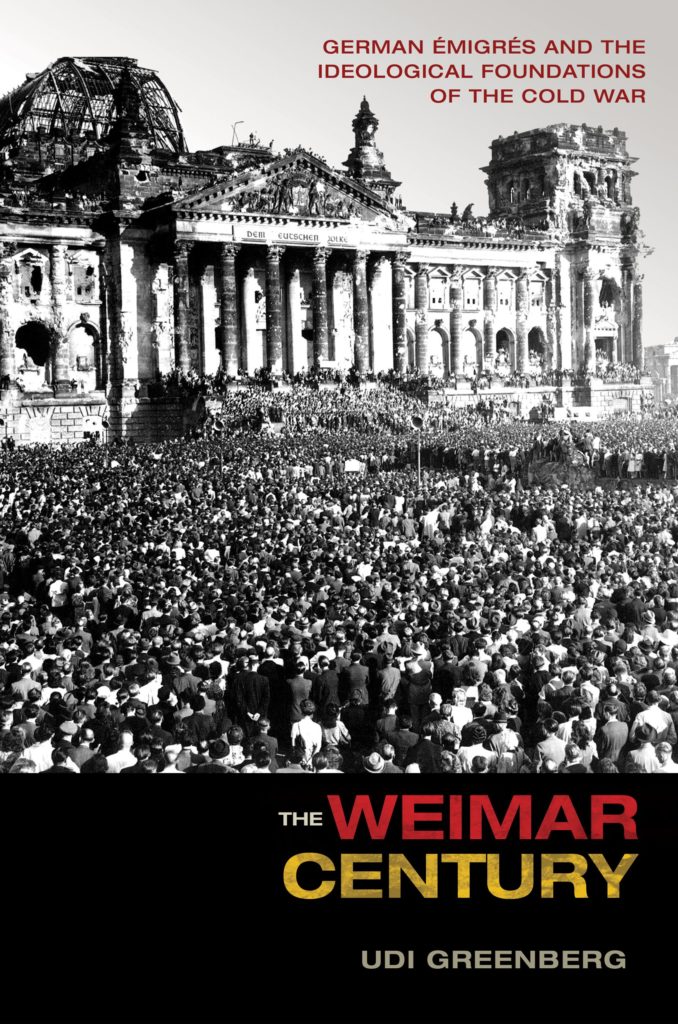
Udi Greenberg (Dartmouth College) received the 2016 European Studies Book Award for his book The Weimar Century:German Émigrés and the Ideological Foundations of the Cold War.
The Weimar Century reveals the origins of two dramatic events: Germany’s post–World War II transformation from a racist dictatorship to a liberal democracy, and the ideological genesis of the Cold War. Blending intellectual, political, and international histories, Udi Greenberg shows that the foundations of Germany’s reconstruction lay in the country’s first democratic experiment, the Weimar Republic (1918–33). He traces the paths of five crucial German émigrés who participated in Weimar’s intense political debates, spent the Nazi era in the United States, and then rebuilt Europe after a devastating war. Examining the unexpected stories of these diverse individuals—Protestant political thinker Carl J. Friedrich, Socialist theorist Ernst Fraenkel, Catholic publicist Waldemar Gurian, liberal lawyer Karl Loewenstein, and international relations theorist Hans Morgenthau—Greenberg uncovers the intellectual and political forces that forged Germany’s democracy after dictatorship, war, and occupation.
In restructuring German thought and politics, these émigrés also shaped the currents of the early Cold War. Having borne witness to Weimar’s political clashes and violent upheavals, they called on democratic regimes to permanently mobilize their citizens and resources in global struggle against their Communist enemies. In the process, they gained entry to the highest levels of American power, serving as top-level advisors to American occupation authorities in Germany and Korea, consultants for the State Department in Latin America, and leaders in universities and philanthropic foundations across Europe and the United States. Their ideas became integral to American global hegemony.
From interwar Germany to the dawn of the American century, The Weimar Century sheds light on the crucial ideas, individuals, and politics that made the trans-Atlantic postwar order.
The Book Award Committee also awarded Honorable Mention to Susanne C. Knittel of Utrecht University for her book The Historical Uncanny: Disability, Ethnicity, and the Politics of Holocaust Memory.
The Historical Uncanny explores how certain memories become inscribed into the heritage of a country or region while others are suppressed or forgotten. In response to the erasure of historical memories that discomfit a public’s self-understanding, this book proposes the historical uncanny as that which resists reification precisely because it cannot be assimilated to dominant discourses of commemoration.
Focusing on the problems of representation and reception, the book explores memorials for two marginalized aspects of Holocaust: the Nazi euthanasia program directed against the mentally ill and disabled and the Fascist persecution of Slovenes, Croats, and Jews in and around Trieste. Reading these memorials together with literary and artistic texts, Knittel redefines “sites of memory” as assemblages of cultural artifacts and discourses that accumulate over time; they emerge as a physical and a cultural space that is continually redefined, rewritten, and re-presented.
In bringing perspectives from disability studies and postcolonialism to the question of memory, Knittel unsettles our understanding of the Holocaust and its place in the culture of contemporary Europe.
2014
Harris Mylonas (George Washington University) received the 2014 European Studies Book Award for his book The Politics of Nation-Building: Making Co-Nationals, Refugees, and Minorities.
What drives a state’s choice to assimilate, accommodate, or exclude ethnic groups within its territory? In this innovative work on the international politics of nation-building, Harris Mylonas argues that a state’s nation-building policies toward non-core groups – any aggregation of individuals perceived as an ethnic group by the ruling elite of a state – are influenced by both its foreign policy goals and its relations with the external patrons of these groups. Through a detailed study of the Balkans, Mylonas shows that how a state treats a non-core group within its own borders is determined largely by whether the state’s foreign policy is revisionist or cleaves to the international status quo, and whether it is allied or in rivalry with that group’s external patrons. Mylonas injects international politics into the study of nation-building, building a bridge between international relations and the comparative politics of ethnicity and nationalism. This is the first book to explain systematically how the politics of ethnicity in the international arena determine which groups are assimilated, accommodated, or annihilated by their host states.

The Book Award Committee also awarded Honorable Mention to John Tresch of the University of Pennsylvania for his book The Romantic Machine: Utopian Science and Technology after Napoleon (University of Chicago Press, 2012).
2012
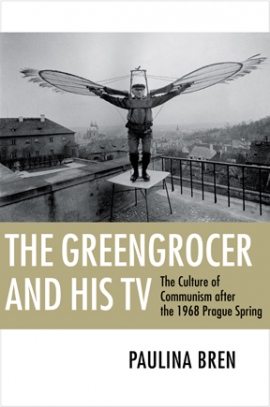
Paulina Bren (Vassar College) won the 2012 European Studies Book Award for her book The Greengrocer and His TV: The Culture of Communism after the 1968 Prague Spring.
The Greengrocer and His TV offers a new cultural history of communism from the Prague Spring to the Velvet Revolution that reveals how state-endorsed ideologies were played out on television, particularly through soap opera-like serials. In focusing on the small screen, Paulina Bren looks to the “normal” of normalization, to the everyday experience of late communism. The figure central to this book is the greengrocer who, in a seminal essay by Václav Havel, symbolized the ordinary citizen who acquiesced to the communist regime out of fear.
2010
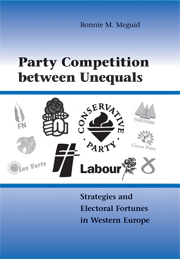
Bonnie M. Meguid’s Party Competition between Unequals: Strategies and Electoral Fortunes in Western Europe offers a rigorous theory and fresh data to explain the relative fortunes of Europe’s new single-issue political parties (green, radical right, and ethnoterritorial parties). In contrast to existing works and theories, Meguid makes parties and party competition the centerpiece of her explanation. She shows that dominant mainstream parties enhance or diminish the electoral performance of niche parties in order to strengthen their own position and weaken the standing of their opponents. Niche parties like the Greens in Belgium are likely to perform especially well when the established parties that they threaten hesitate and react too slowly to their issues due to their own internal divisions or lack of centralized organization. Meguid convincingly tests her theory with cross-sectional time-series data and carefully selected case studies. This innovative study furthermore shows that niche parties not only lead mainstream parties to react by shifting their own policy objectives, but also by altering the very institutions that structure party competition.
Mark I. Choate’s Emigrant Nation: The Making of Italy Abroad explores the Italian government’s effort to sponsor a transnational Greater Italy during the late nineteenth and early twentieth centuries. Using a range of archival sources, the work richly illustrates the ways in which the Italian state supported its vital interests and upheld national culture through an imagined global nation that included millions of recent emigrants. Choate’s findings suggest that Italy’s colonial project not only involved regions in Africa, but also incorporated ethnic communities in cities such as New York, where emigrants maintained cultural, religious, and economic ties to Italy. Furthermore, he shows how the flow of influence was not unidirectional: the emigrant communities shaped the Italian state’s policy and even its understanding of itself. This fascinating work of history has important lessons for thinking about transnational communities today ranging from Mexico to the Philippines.
2008
Todd Shepard (Department of History, Temple University) was the 2008 recipient of the CES Book Award for his book, The Invention of Decolonization: The Algerian War and the Remaking of France (Cornell University Press), an analysis of how the war in Algeria and efforts to resolve the issues it raised were crucial to the making of the Fifth Republic. Shepard convincingly reveals the war’s crucial role in recasting definitions of French identity and citizenship, which arguably continue to shape current debates about racial inequality, exclusion, assimilation, immigration and the place of Islam in France.
2006
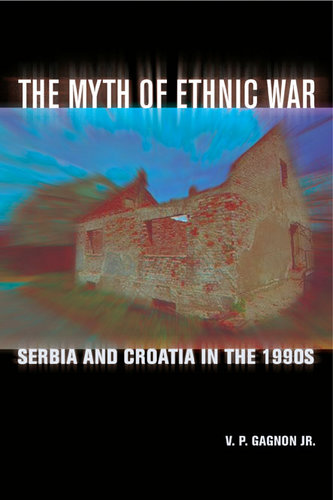
Chip Gagnon for The Myth of Ethnic War: Serbia and Croatia in the 1990s. In the last ten years, Serbia and Croatia have become reference points for virtually all scholars who wish to analyze ethnic conflict either in Eastern Europe or in other parts of the world. Chip Gagnon who had visited the former Yugoslavia in the early 1980s found the outbreak of ethnic hatred and violence in this area in the 1990s puzzling. He saw the area as one rich in civil society with the potential for democratic cooperation once the Communist regime had fallen. Based on extensive field work and documentary evidence collected in the 1990s, Gagnon’s Myth of Ethnic War makes the counter-intuitive claim that ethnic hatred and violence was not based upon the mobilization of primordial blood rivalries, but rather on the demobilization of collectivities that were poised to modernize the country given the historical opportunity. Political and economic elites in Belgrade and Zagreb created and manipulated violent conflict along ethnic lines to short circuit political and economic change in the early 1990s. In this carefully argued and meticulously researched book, Gagnon not only adds to previous historical accounts of conflict in the region, but also extends political cultural approaches to the study of politics by showing the demobilization is as important a component of constructivist accounts as mobilization.
Francine Hirsch for Empire of Nations: Ethnographic Knowledge and the Making of the Soviet Union. Francine Hirsch’s Empire of Nations examines how the Bolsheviks carved a Soviet Union out of a disparate group of national territorial entities. Applying an approach more recently used in studies of democratic nation state building, Hirsh shows how the Bolsheviks went about integrating a national idea into an administrative territorial structure of the new Soviet State. By focusing upon this forced fusion of nation and state that occurred in the Bolshevik period she also manages to account for the fragility of the national idea when the Soviet Union broke apart in the 1990s. Unique to her account is her focus upon the role of former imperial ethnographers and local historians, who created accounts of the diverse peoples of the USSR as bed rock of the new Soviet Empire, an empire without imperialism. Hirsch marshals an impressive array of evidence that she skillfully deploys to construct an argument that is elegant in its nuance and forceful in its central claims. The overall effect of Empire of Nation is stunning and the analysis not only extends our knowledge of the former Soviet Union, but also offers important insights to present political realities and the study of empire more generally.