By James Francis Cerretani
With over 80 million forcibly displaced persons worldwide at the end of 2020 (UNHCR, 2021), there is an increasing need to understand how communities living across borders are staying connected.
By Alain Duplouy
The objective of this graduate seminar is to bring a historiographical dimension to the training of archaeology students, by providing them with the keys to various readings of ancient Greek societies and their material culture and the way these have been constantly renewed since the nineteenth century.
By Maria Dimitropoulos and Roberto C. Ferrari
The initiative Parallel Heritages: Humanities in Action, led by professors Holger Klein (Columbia University in the City of New York) and Alain Duplouy (Université Paris I, Panthéon-Sorbonne), explores the history, development, and present state of University collections of classical antiquities at, respectively, Columbia University in New York and the Panthéon-Sorbonne 1 in Paris.
By Monica Bulger
In the storerooms beneath Columbia University’s Avery and Fine Arts Library, some 650 Greek pottery fragments dating from the Early Bronze Age to the Classical Period are sorted into individually labeled bags in sturdy trays.
By Joseph Woldman
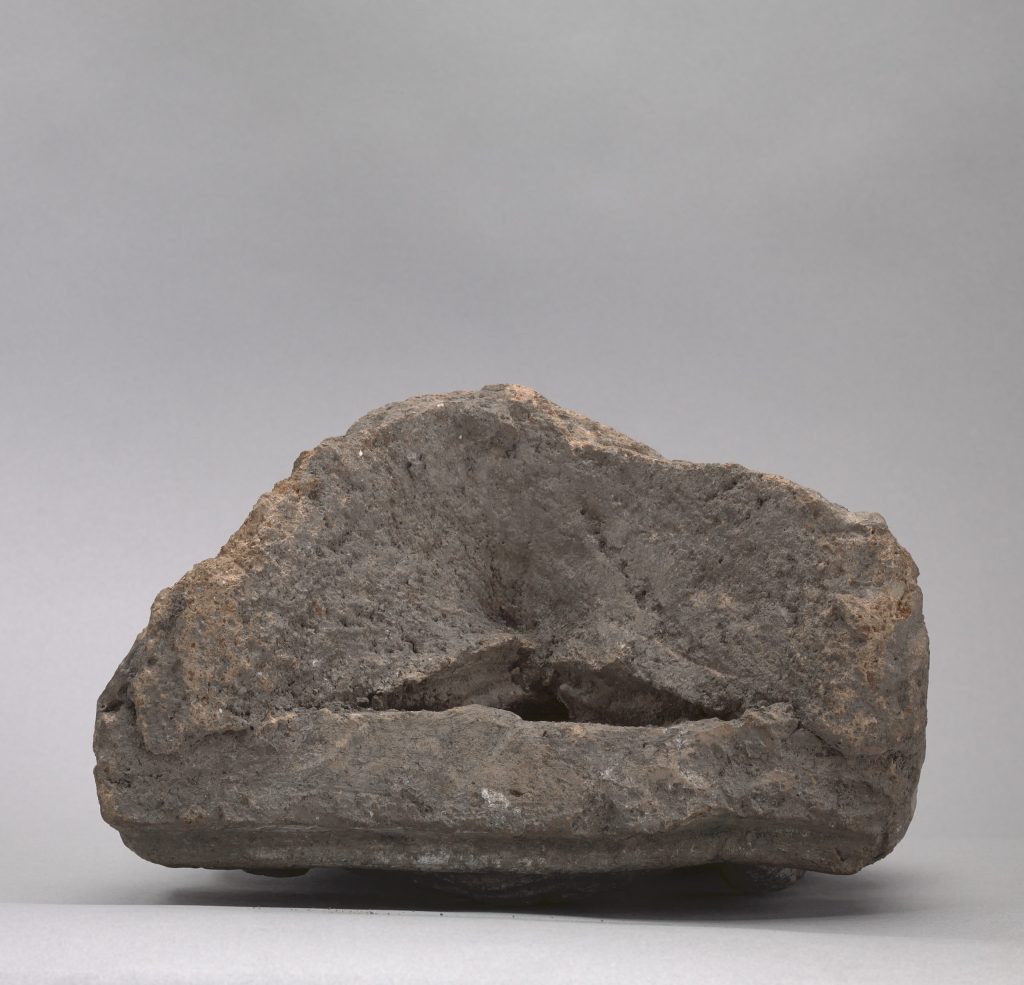
An antefix discreetly rests face-down on a storage shelf in Columbia University’s Art Properties collection. The object is readily identifiable by its terminal imbrex, or cover-tile, which remains attached to the decorative roof tile.
By Majdolene Dajani and Erhan Tamur
The modern discipline of Ancient Western Asian art and archaeology began as a colonial enterprise in the mid-nineteenth century. The European, American, and Ottoman expeditions in modern-day Iraq and Syria brought to light the ancient Mesopotamian civilizations of Sumer, Akkad, and Assyria.
Interviewed by Hélène B. Ducros
The drawback of European studies, but also politics and international relations, is that we teach a moving target. You may teach something one day and the next day it has completely changed.
By Neculai-Cristian Surubaru, Caterina Di Fazio, Miriam Urlings,Catalina Goanta, Thales Costa Bertaglia Thales, and Mathieu Segers
Along the Maas River, in the far South of the Netherlands, one can find the city of Maastricht. One of the oldest cities in the country, it has been a Roman Empire military stronghold, a cultural and religious center, and the birthplace of the current European Union (EU)