
During Pride Month, the Council for European Studies recognizes the contributions of LGBTQ+ scholars, students, educators, and activists whose work has expanded our understanding of Europe and the ways people experience identity, citizenship, community, and belonging.
This month we are excited to highlight the work of Tunay Altay (Humboldt University) and Maryna Shevtsova (KU Leuven), who lead the Gender & Sexuality Research Network.
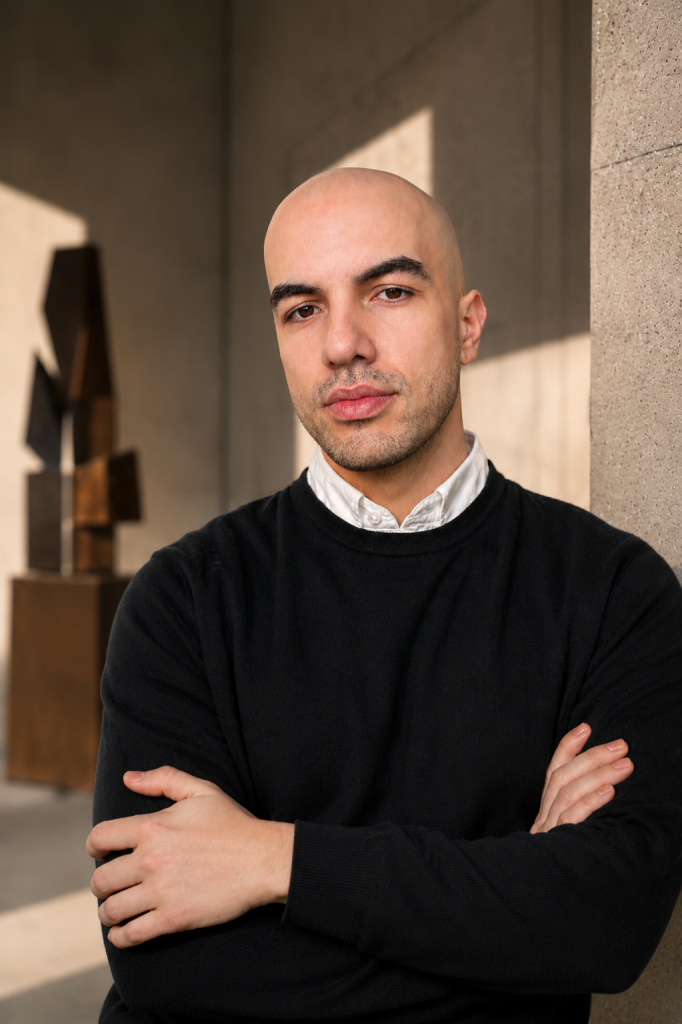
Tunay Altay is a postdoctoral researcher in sociology and gender studies at the Humboldt University of Berlin. Their work centers on migration and border politics; citizenship and social inequalities; and gender and sexuality with a specific focus on Europe and the Middle East. Through this work, they position queer migration research as a diagnostic lens to study major political transformations of our times.
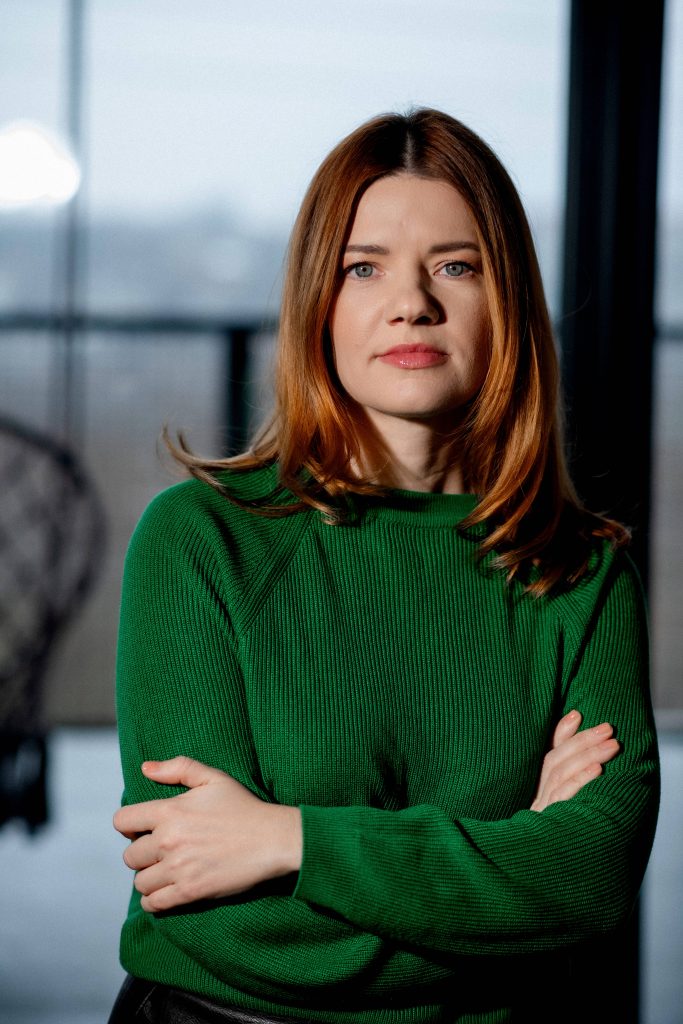
Maryna Shevtsova is a political scientist and policy advisor specializing in gender, sexuality, and civilian vulnerability in conflict-affected and post-Soviet contexts. She currently serves as a Senior FWO Postdoctoral Fellow at KU Leuven (Belgium), where their work bridges academic research and policy engagement. She holds a PhD in Political Science from Humboldt University of Berlin and have received competitive international fellowships, including Fulbright (University of Florida), the Swedish Institute Fellowship (Lund University), and the MSCA EUTOPIA Fellowship at the University of Ljubljana.
Question 1: Tell us a bit about your scholarship and research background. How did you come to the study of gender and sexuality? How did you become involved with the Gender and Sexuality Research Network?
Tunay: I am a sociologist whose work explores how gender, sexuality, and migration are mediated through everyday practices and institutional regimes, and how inequalities are produced, contested, and transformed. My research is informed by empirically grounded qualitative and mixed method research, interdisciplinary collaborations, and a commitment to contributing to queer feminist and decolonial thinking and the broader public debates on culture and power.
My own path into academia was somewhat unconventional. I have always been interested in questions of social inequality and justice, which initially led me to study law. I was fascinated by how legal systems shape social life, but over time I became increasingly interested in the cultural and political dimensions that law alone could not explain. This led me to pursue a Master’s degree in Critical and Cultural Studies and eventually a PhD in Sociology. You can see traces of that intellectual journey in my current work. I continue to study socio-legal formations through concepts such as borders, citizenship, and recognition, but I approach them through the lenses of critical theory, queer feminism, and migration studies.
The Council for European Studies has been an important intellectual home for me since my doctoral years. One of my earliest ethnographic projects examined the bordering practices experienced by migrant trans sex workers in Berlin, a study I co-authored with Gökçe Yurdakul and Anna C. Korteweg. I presented that work at CES, and I still remember how generous and intellectually engaged the Gender and Sexuality Research Network community was. The feedback I received there was instrumental in shaping the article and, more broadly, in making me feel that my work belonged within an international community of scholars committed to studying gender and sexuality in all their complexity.
Over the years, that sense of belonging naturally evolved into a deeper involvement with the network. Becoming co-chair feels less like taking on a new role than continuing a conversation that has accompanied my academic development from the very beginning.
Maryna: I am a political scientist and my research focuses on the intersections of gender, sexuality, human rights, and political change, particularly in Central and Eastern Europe and the post-Soviet region. Across these topics, I am interested in how gender and sexuality shape citizenship, belonging, and access to rights in times of both democratic transformation and democratic backsliding.
My path into gender and sexuality studies was not entirely straightforward. I originally trained in international relations, gender studies, and political science, and when I began my PhD in Political Science in Germany in 2013, LGBTQ rights were still a relatively marginal topic within the discipline. I remember attending the annual conference of the Council for European Studies and finding only a handful of panels that engaged with gender and sexuality. At the time, it was not always easy to convince others that these topics were central to understanding politics rather than niche social issues. Yet that intellectual space was also incredibly inspiring. I was particularly influenced by scholars such as Koen Slootmaeckers and Sarah Cooper, who were co-chairs of the Gender and Sexuality Research Network when I first became involved. Their work and leadership demonstrated that rigorous scholarship on gender and sexuality could make important contributions to mainstream political science and European studies.
The growth of the Gender and Sexuality Research Network over the years has been remarkable. What was once a relatively small community has become a vibrant and visible part of the CES conference, with panels taking place across all days of the meeting and covering an increasingly diverse range of topics and regions. At a time when democracies are under pressure and gender and sexual equality face renewed political challenges around the world, I believe such spaces are more important than ever. This is one of the reasons I was enthusiastic about joining Tunay Altay as co-chair of the network. For me, the network is not only a platform for excellent scholarship but also a space where we can amplify voices that are often underrepresented in academic debates, particularly scholars from Central and Eastern Europe and other non-Western contexts. I am also committed to strengthening connections between academia and activism, ensuring that our research remains engaged with the communities, movements, and political struggles that often inspire it in the first place.
Question 2: What distinctive contributions can gender and sexuality scholarship make to contemporary European Studies, particularly in comparative or transnational perspective? In what ways does focusing on gender and sexuality shed new or distinctive light on big questions in European Studies?
Maryna: Gender and sexuality scholarship has become indispensable to contemporary European Studies because it helps us understand processes that are often treated as peripheral but are in fact central to political, social, and geopolitical transformations. Questions of gender and sexuality are deeply intertwined with debates about democracy, citizenship, nationalism, migration, security, European integration, and human rights. Examining these issues therefore allows us to revisit many of the field’s core questions from new angles.
One of the most important contributions of gender and sexuality scholarship is that it reveals how political conflicts are often fought through struggles over bodies, families, reproduction, and social norms. Across Europe and beyond, debates about LGBTQ rights, reproductive rights, gender equality, and education have become key sites through which broader disputes about national identity, sovereignty, democracy, and belonging are articulated. Studying these dynamics helps us understand not only changing social attitudes but also the rise of populism, democratic backsliding, and the growing contestation of liberal democratic values.
A comparative and transnational perspective is particularly important because ideas about gender and sexuality travel across borders. Anti-gender campaigns, feminist mobilisations, LGBTQ activism, and policy frameworks circulate through international organisations, transnational advocacy networks, religious institutions, and digital platforms. Looking at these processes comparatively allows us to move beyond simplistic distinctions between “progressive” and “backward” societies and instead examine how local, national, and global dynamics interact in different contexts.
Too often, knowledge production in European Studies continues to be dominated by Western European experiences and assumptions. Yet developments in countries such as Ukraine, Georgia, Poland, Hungary, or Moldova demonstrate that questions of gender and sexuality are not merely reflections of broader political change; they frequently become drivers of political mobilisation, democratic contestation, and geopolitical positioning. The current war in Ukraine, for example, has highlighted how issues of gender equality, LGBTQ rights, and sexual violence are deeply connected to questions of nation-building, security, European integration, and reconstruction.
Gender and sexuality scholarship also encourages us to rethink what counts as political. It draws attention to everyday experiences, intimate relationships, care, reproduction, and embodied forms of power that have historically been marginalised within European Studies. By doing so, it broadens our understanding of how political orders are maintained, challenged, and transformed.
At a moment when Europe faces multiple crises—from democratic erosion and war to growing inequalities and social polarisation—gender and sexuality scholarship offers essential tools for understanding not only who is included or excluded from political communities, but also how ideas of Europe itself are imagined, contested, and reshaped.
3. As co-chairs of the Gender and Sexuality Research Network, what kinds of intellectual exchange, collaboration, or mentorship are you hoping to cultivate within the CES community?
Tunay: One of our central goals is to create a space where scholars at different career stages can develop ideas, receive thoughtful feedback, and build lasting intellectual connections. In particular, we want to continue supporting early career researchers, whose work often pushes the field in exciting new directions, but who may not always have access to strong mentoring networks.
At the same time, we see the Gender and Sexuality Research Network not as an isolated field but as a meeting point for broader conversations about migration, race, democracy, political economy, religion, violence, and social movements. Gender and sexuality are not niche concerns: they are fundamental dimensions of how societies organize power and inequality. For that reason, we are especially interested in fostering collaborations across the different CES research networks.
Methodologically and theoretically, we hope to highlight work that embraces intersectional, decolonial, queer feminist, transnational, and Global South perspectives. The field is at its strongest when it remains intellectually diverse and open to different ways of producing knowledge, whether through ethnography, archival work, quantitative research, or experimental and creative methodologies.
4. What are the current challenges (be it methodological, political, institutional) of studying gender and sexuality? Why is gender and sexuality critical now, more than ever?
Tunay: Gender and sexuality have increasingly become sites of political contestation, moral regulation, and social polarization, both across Europe and globally. As a result, the field itself has become a target of anti-gender campaigns, broader attacks on critical scholarship, and forms of anti-intellectualism that seek to portray academic research as merely ideological.
Institutionally, we are witnessing growing pressures on critical scholarship through budget cuts, increasing precarity for early career researchers, and attempts to portray gender studies as ideological rather than scientific. One of the dangers of this moment is that the field itself may become disciplined into proving its legitimacy through narrow definitions of what counts as “proper” research. I think it is important to resist that impulse and to preserve the methodological diversity that has always characterized gender and sexuality studies.
At the same time, these challenges also explain why the field is more important than ever. Gender and sexuality are not marginal topics; they are fundamental dimensions through which contemporary societies organize inclusion and exclusion, rights and recognition, intimacy and belonging.
Ultimately, I think gender and sexuality studies matter because they offer not only a critique of existing inequalities, but also a language for imagining alternative futures. At a time when many political actors seek to narrow the boundaries of who belongs, the field continues to ask a simple but profoundly democratic question: how can we build societies that allow more people to live freely, safely, and with dignity?
5. Looking ahead, what emerging questions or methodological approaches in gender and sexuality studies do you think will be especially important for scholars of Europe in the coming years?
Maryna: I think one of the most important directions for the coming years will be understanding how gender and sexuality are being reshaped by overlapping crises, including war, democratic backsliding, migration, climate change, and rapid technological transformation. Scholars of Europe will need to pay closer attention to how questions of gender equality, reproductive rights, LGBTQ rights, and family politics are increasingly connected to geopolitical competition, security debates, and struggles over democracy itself. At the same time, it will be essential to move beyond a Western European focus and engage more seriously with knowledge, experiences, and political developments from Central and Eastern Europe, the Balkans, the South Caucasus, and other regions that are often treated as peripheral despite being central to many contemporary transformations.
Methodologically, I believe the field will benefit from greater openness to collaborative, interdisciplinary, and engaged forms of research. This includes combining qualitative and digital methods, working across national boundaries, and building stronger connections between academia and civil society. As scholars increasingly study polarisation, conflict, online spaces, and vulnerable communities, questions of ethics, positionality, and knowledge production will become even more important. I am particularly interested in approaches that treat activists, practitioners, and affected communities not simply as research subjects but as partners in the production of knowledge.
6. What sessions are you looking forward to at the 2026 CES conference?
Tunay: I am genuinely excited about our entire program this year. We have seven panels that bring together scholars working on topics ranging from queer migration and reproductive politics to anti-gender movements, race, citizenship, and new methodological approaches to studying gender and sexuality.
I would especially encourage participants to join our collaborative roundtable, organized together with the Immigration and Radicalism & Violence Research Networks: “Entangled Crises, Contested Futures: Researching Migration, Radicalism, and Gender in Difficult Times.” The conversation reflects something that has become increasingly clear in recent years—that the major political challenges we face cannot be understood in isolation. Questions of migration, democratic erosion, nationalism, gender, and violence are deeply interconnected.
More broadly, I always look forward to the informal conversations that happen between sessions. One of the great strengths of CES and the Gender and Sexuality Research Network is that it brings together scholars from different disciplines, countries, and career stages who are all thinking through these questions from different angles. Those exchanges are often where the most exciting collaborations begin.
Maryna: I am particularly looking forward to the launch of our edited volume, Beyond Queer Cold Wars: Troubling Geopolitical Visions of Gender and Sexuality, which I co-edited with Tatiana Klepikova and Emil Edenborg. It has been a long journey, and I am excited to see the conversations that emerge around the book. I am especially looking forward to the panel Drag, Art, and Activism: Queer Negotiations of (Trans)National Belonging and Solidarity, which speaks to many of the themes that have shaped my own research in recent years, including transnational activism, identity, culture, and geopolitical contestation.
More broadly, I am excited about the strength of this year’s program. There are several sessions on migration, democracy, and radicalization that I hope to attend, as these topics increasingly intersect with questions of gender and sexuality in important ways. One of the things I value most about CES is the opportunity to move beyond one’s immediate area of expertise, and the 2026 program offers many opportunities to engage with emerging debates across European Studies.
Thank you so much to Tunay and Maryna for their time and this excellent discussion. Be sure to check out the line up of panels organized by the Gender & Sexuality Research Network. You can also learn more about the network here.
Gender and Sexuality Research Network Panels:
Wednesday, June 17
9:00am-10:30am
Roundtable: “Reasons to be Cheerful”: Finding Hope in Today’s Europe
Panelists:
Ramona Coman (Université Libre de Bruxelles)
Roberta Guerrina (University of Bristol)
Annick Masselot (University of Canterbury)
Lee McGown (Queen’s University Belfast)
Koen Slootmaeckers (City St. George’s University of London)
Chair: Maxine David (Leiden University)
11:00-12:30pm
Roundtable: Feminist Alliances And Visions For Peace: Building Solidarities Between Feminist Civil Society And Academia In The Netherlands
Panelists:
Hanna Muehlenhoff (University of Amsterdam)
Maxine David (Leiden University)
Maryna Shevtsova (KU Leuven)
Chair: Robert Guerrina (University of Bristol)
1:00-1:45pm
Gender and Sexuality Business Meeting
The Gender and Sexuality Research Network’s Business Meeting will review this year’s program, gather ideas for next year’s conference, and announce the winner of the Best Article Prize.
2:00pm-3:30pm
Paper Panel: Beyond Queer Cold Wars: Troubling Geopolitical Visions of Gender and Sexuality
4:00pm-5:30pm
Paper Panel: Challenges to Democracy and Unity in Europe: Anti-gender Backlash in the Era of Societal Polarisation
Thursday June 18
9:00am-10:30am
Paper Panel: Drag, Art, and Activism: Queer Negotiations of (Trans)National Belonging and Solidarity
11:00am-12:30pm
Roundtable Entangled Crises, Contested Futures: Researching Migration, Radicalism, and Gender in Difficult Times
This roundtable is jointly sponsored by the Gender and Sexuality RN, Immigration RN, and Radicalism and Violence RN.
Chair/discussant: Richard McNeil-Willson
Speakers:
Saskia Bonjour
Stephanie Hanlon
Annick Masselot
Chris Changwe Nshimbi
Lina Papadopoulou
Maryna Shevtsova
Berna Turam
Katarzyna Wojnicka
11:00am-12:30pm
Paper Panel: Gendered Solidarities and Queer Feminist Interventions
Published on June 11, 2026